I’m using Walter Writes AI to clean up a setup guide for a coworker. I tried rewriting the paragraph about plugging in a scanner, but the revised text keeps skipping the cable check. Pasting that paragraph by itself didn’t fix it either. Is there a way to keep the steps intact?
The mistake I’d push back on is treating a detector’s confidence as its accuracy. These 24 tools don’t support that shortcut: human writing sometimes scored above generated writing, and several “free” options never produced readable results. I’d separate completed checks from access claims before trusting either.



Errors I wouldn’t overlook
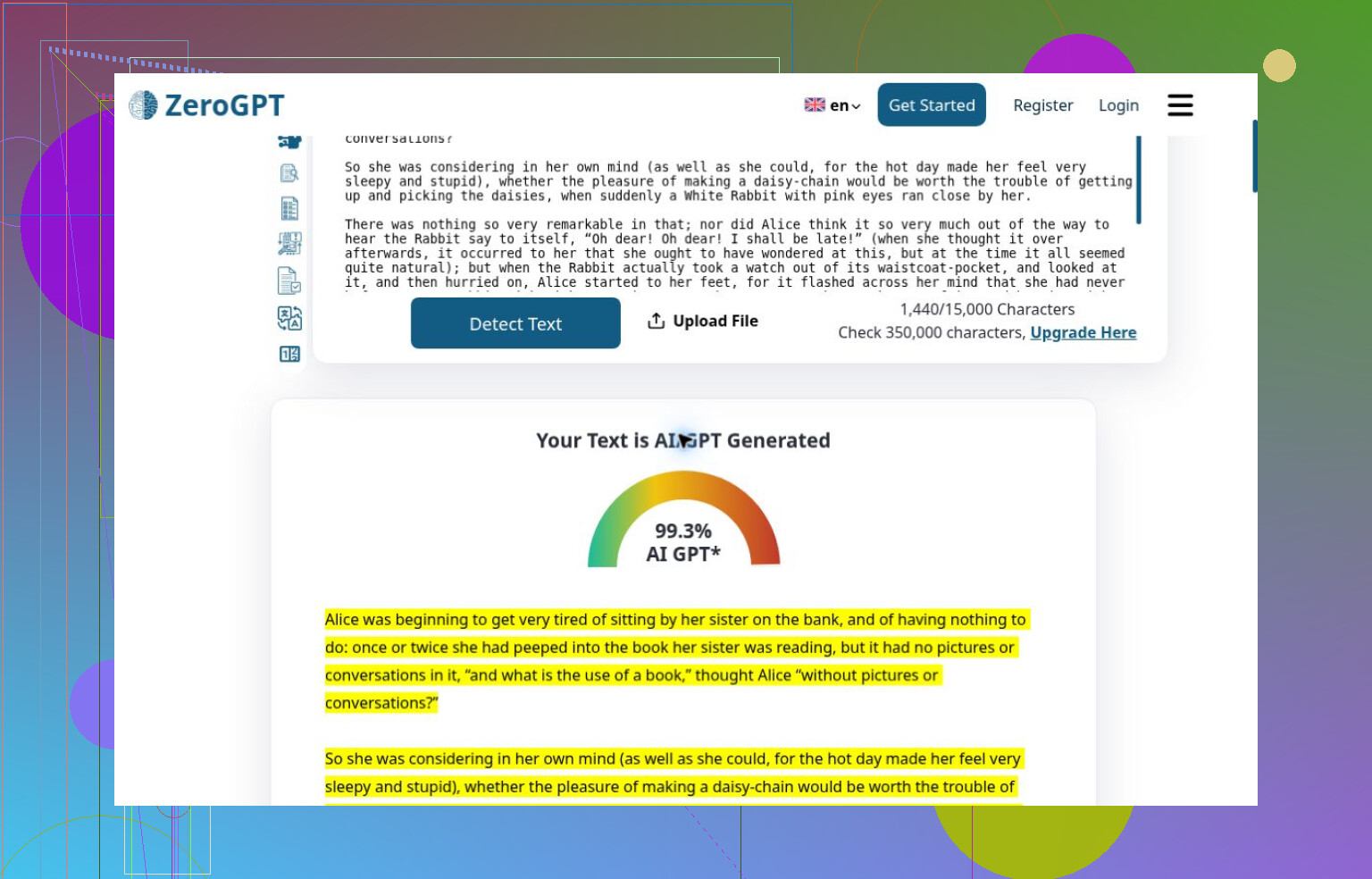
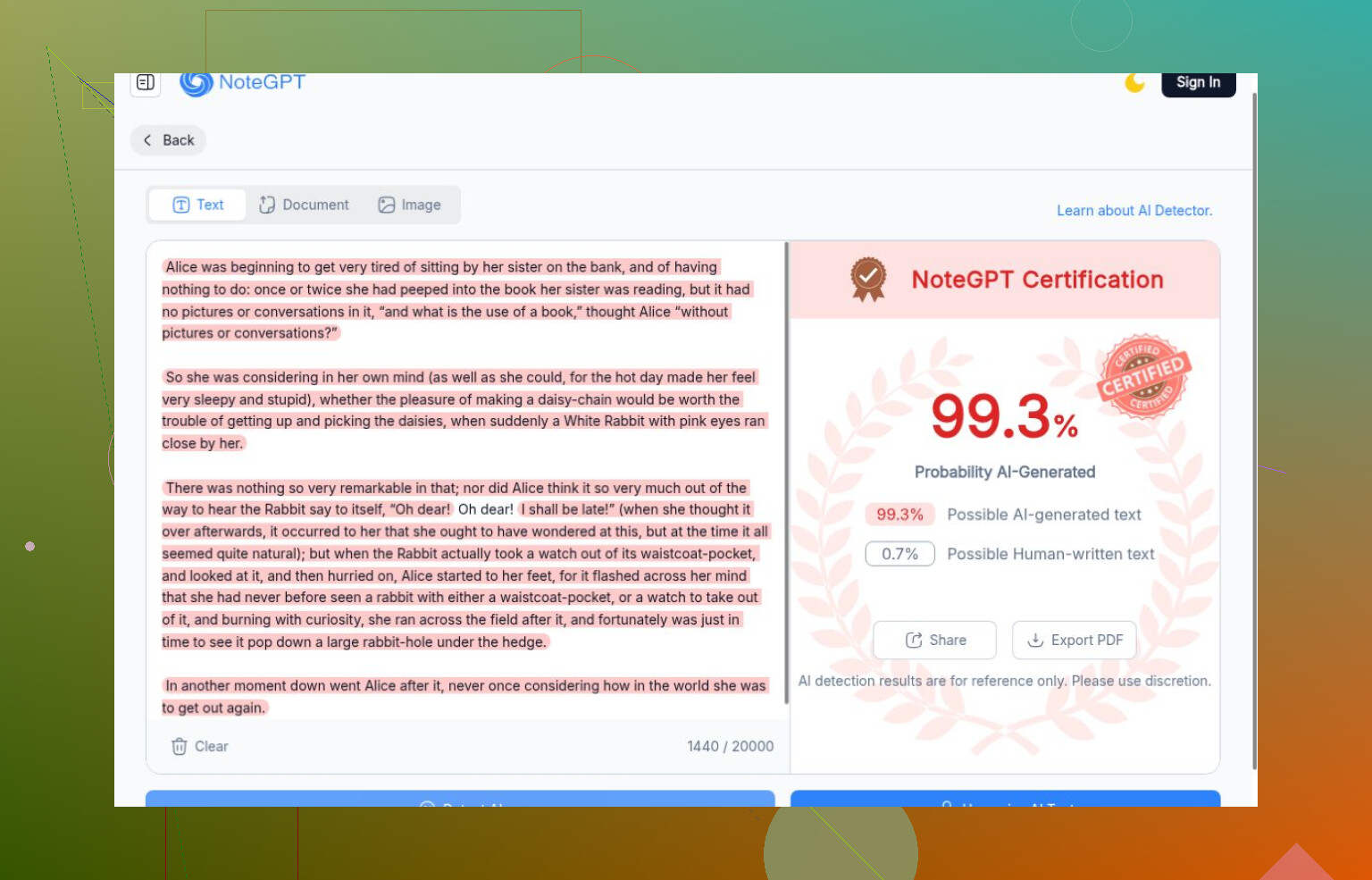
ZeroGPT completed six checks, catching four AI passages but scoring Carroll 99.3% AI, above every generated passage. NoteGPT’s three results were essay 81.1%, story 55.2%, Carroll 99.3%. Matching numbers don’t establish shared technology.
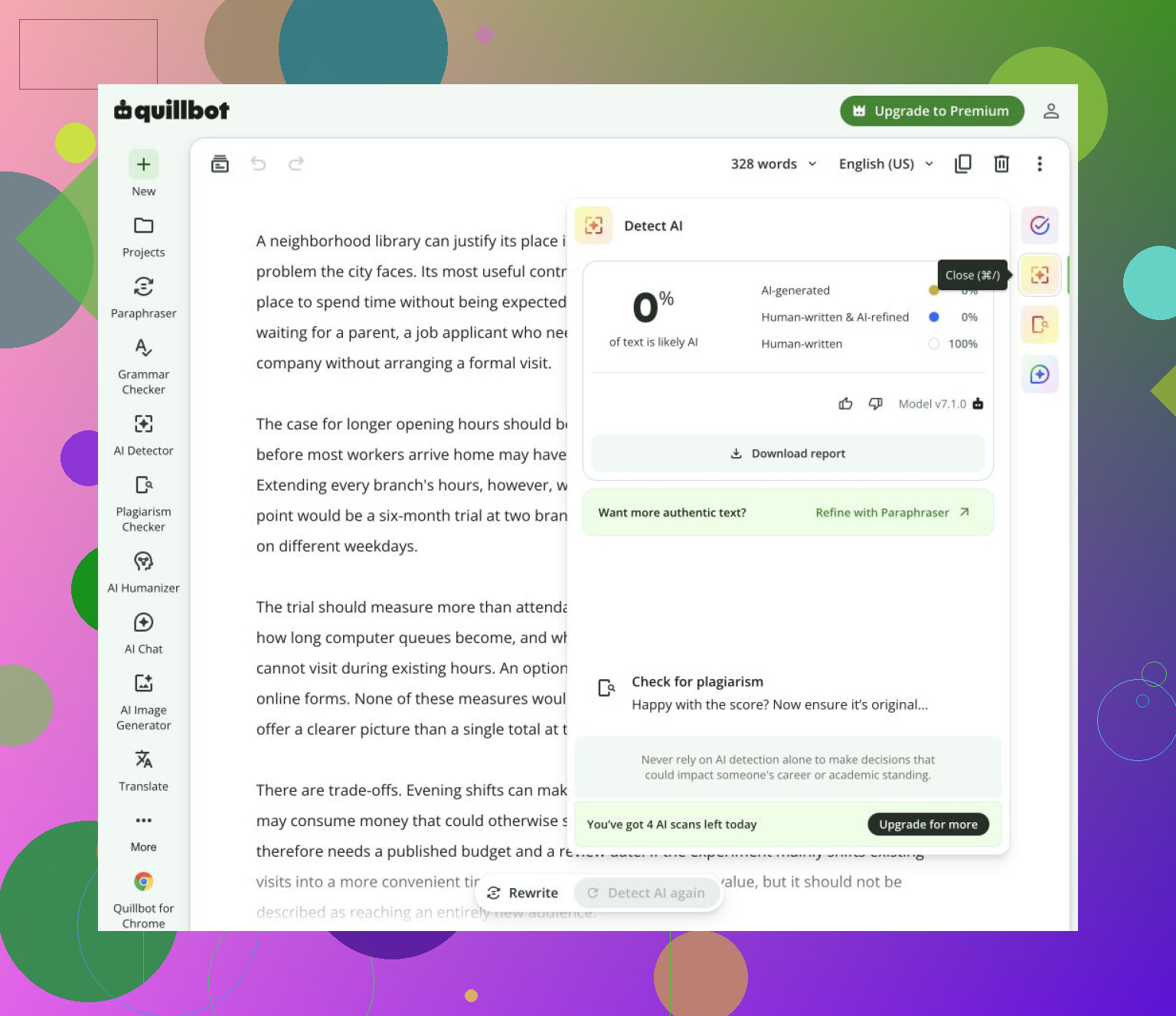
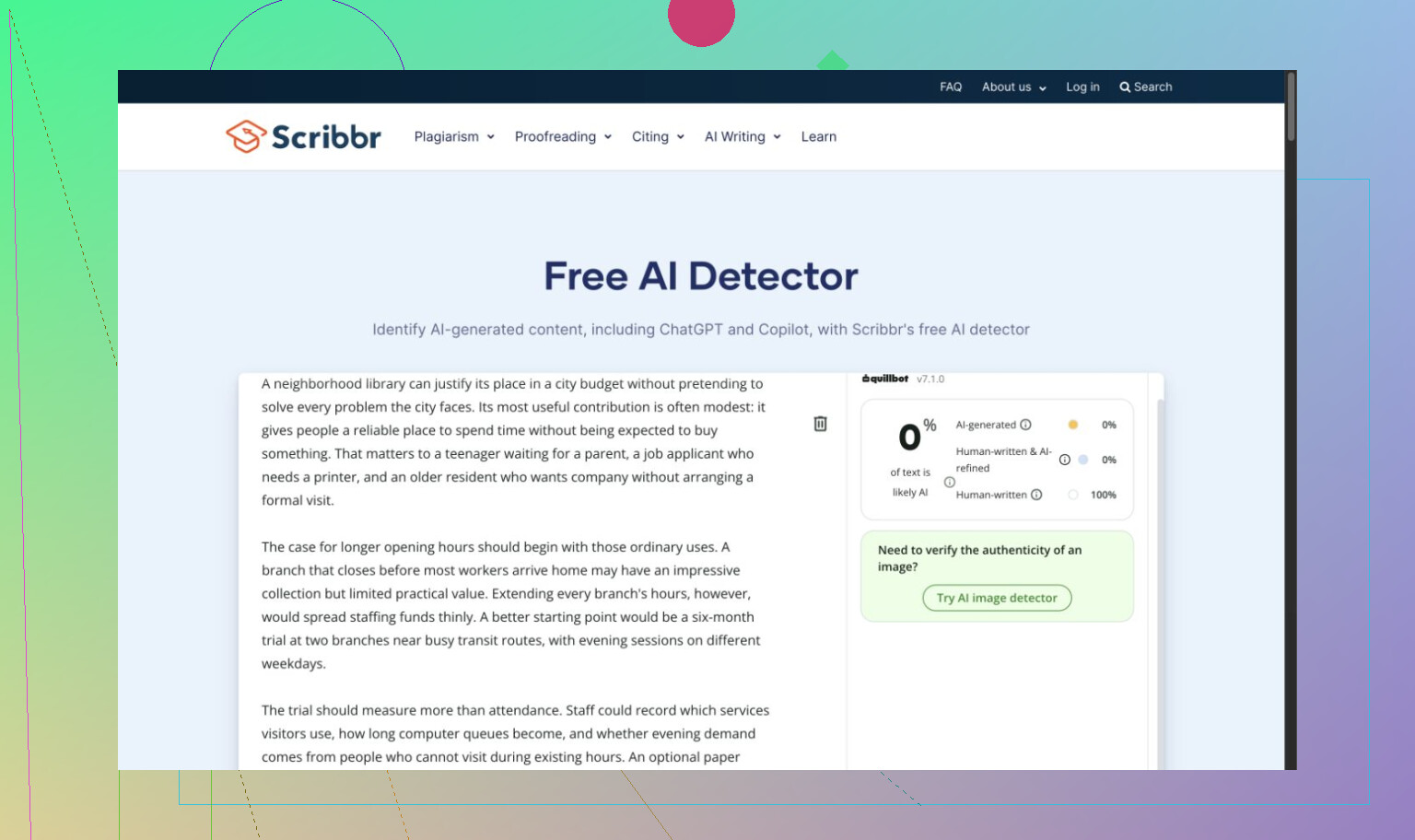
QuillBot labeled four AI passages and Carroll 100% human-written; access stopped after five scans despite advertising six daily. Scribbr’s usable follow-up labeled essay and Carroll 100% human-written too. Its QuillBot branding isn’t evidence of independence.
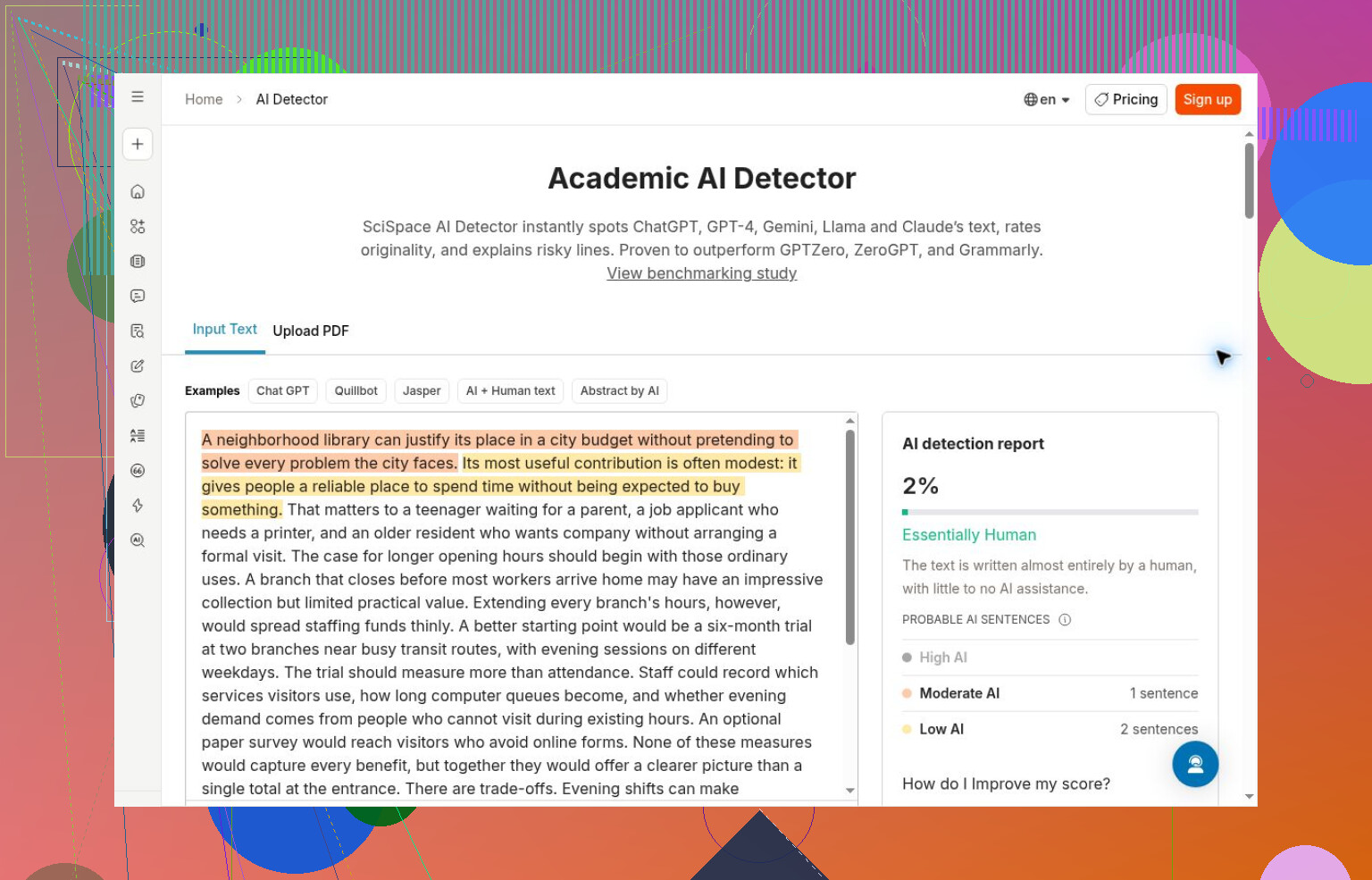
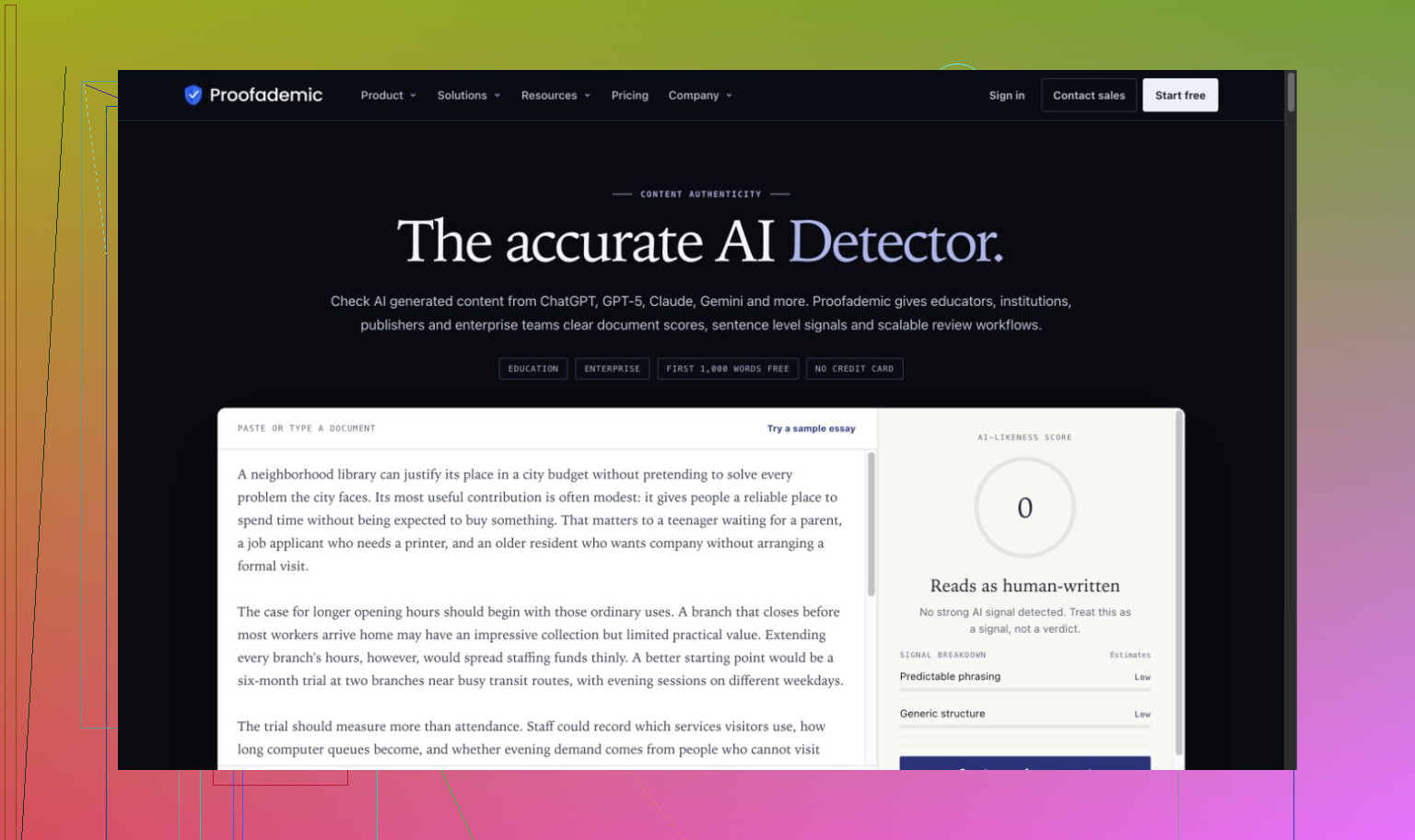
SciSpace called the essay 2% AI, “Essentially Human,” then required signup. Proofademic’s public demo gave essay and Carroll 0/100 AI-likeness. Surfer gave essay, story, and Carroll 0% AI.
Correct calls with catches
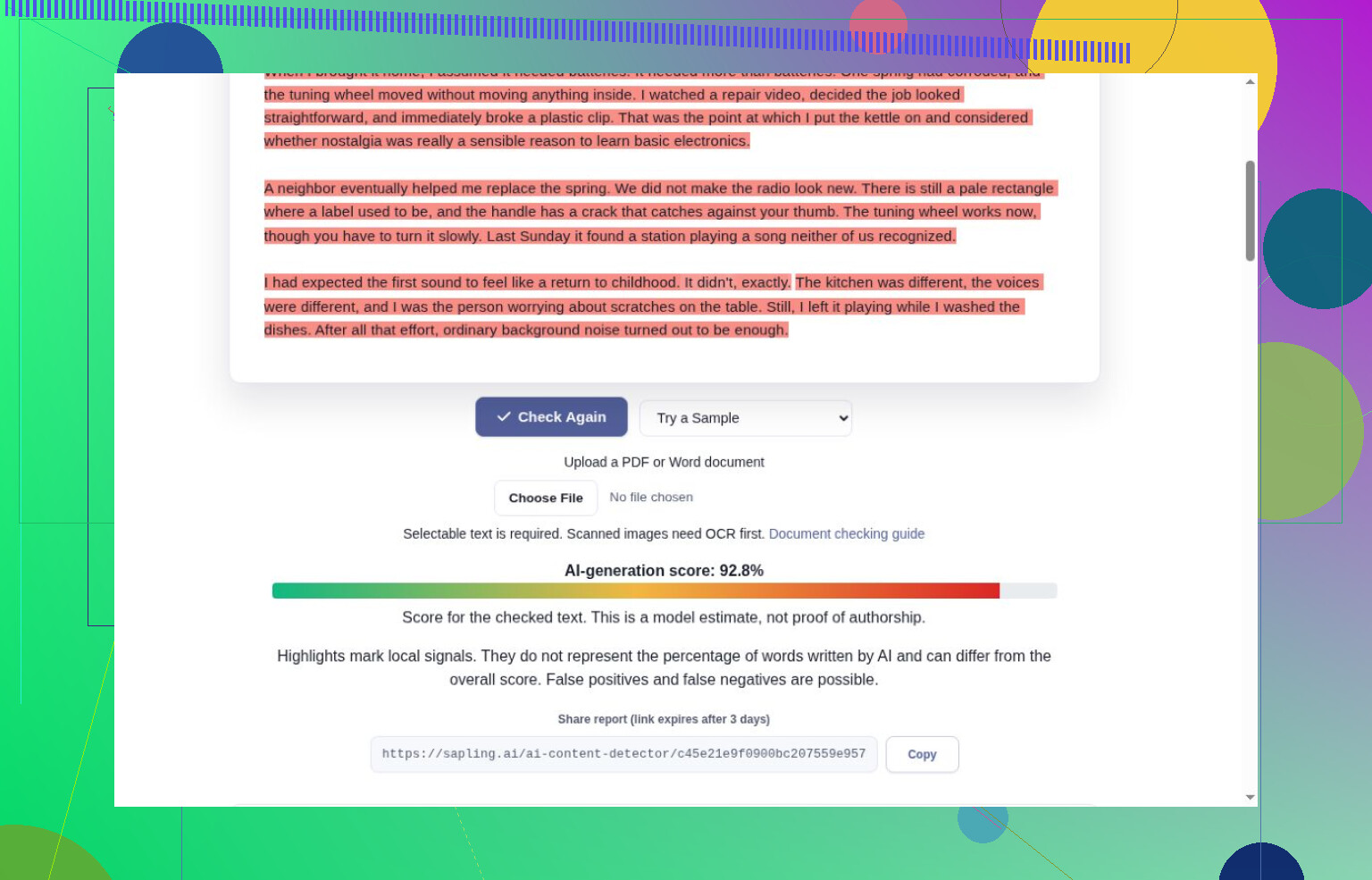
I’d count Sapling’s story 92.8% and Carroll 0.0% checks, but qualify its essay’s 100.0%: only 2,000 of 2,070 characters were processed.
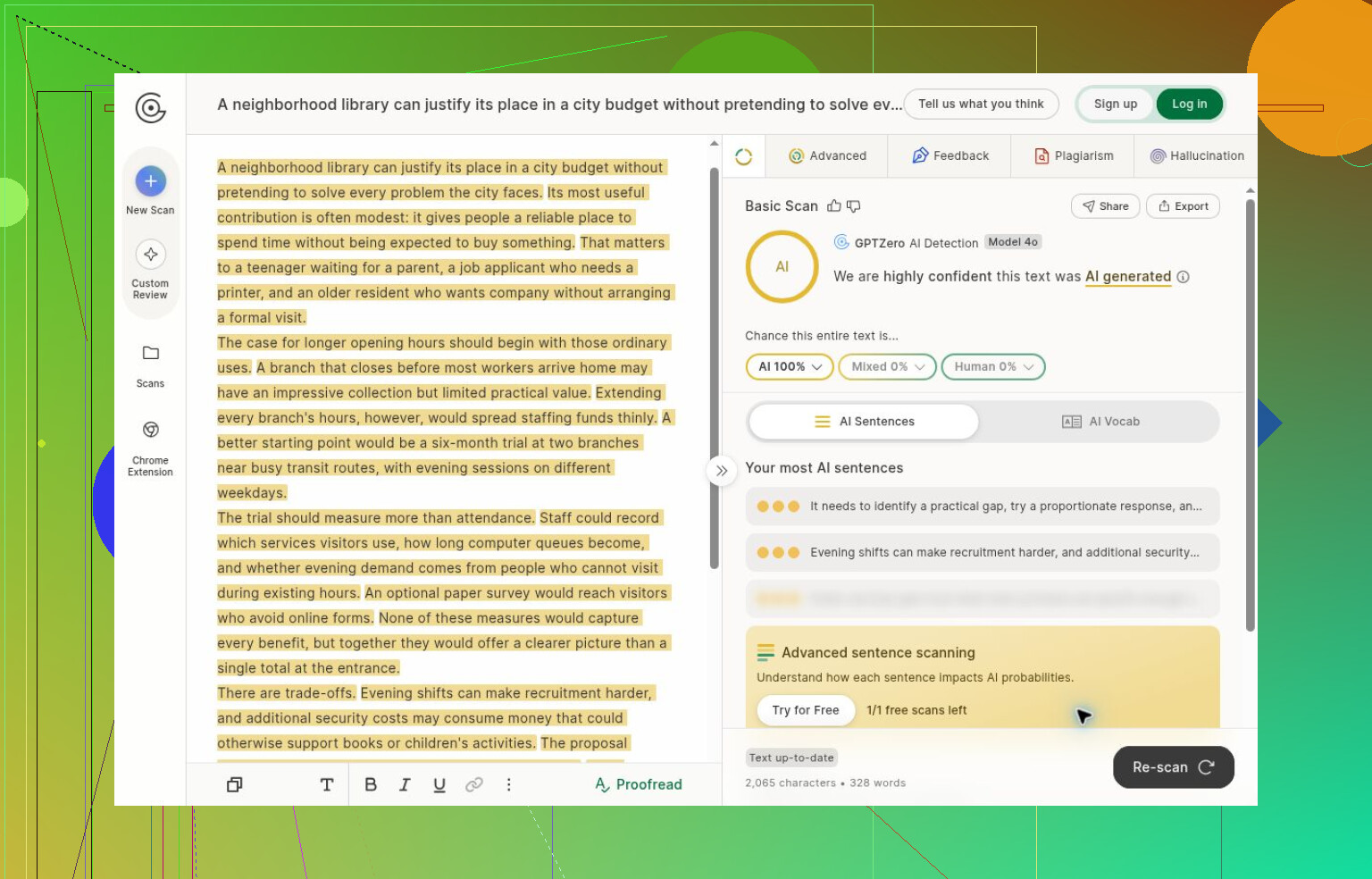
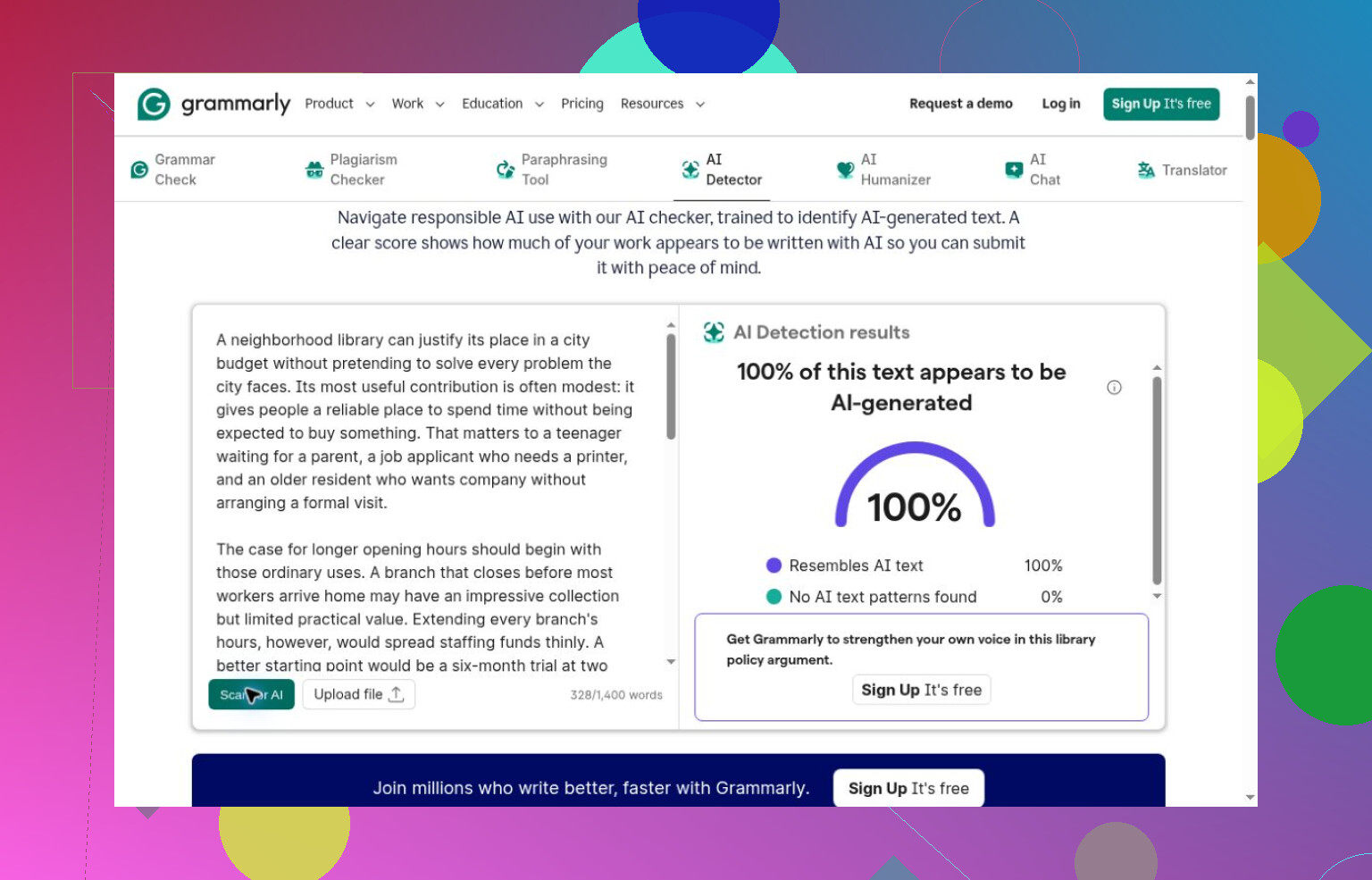
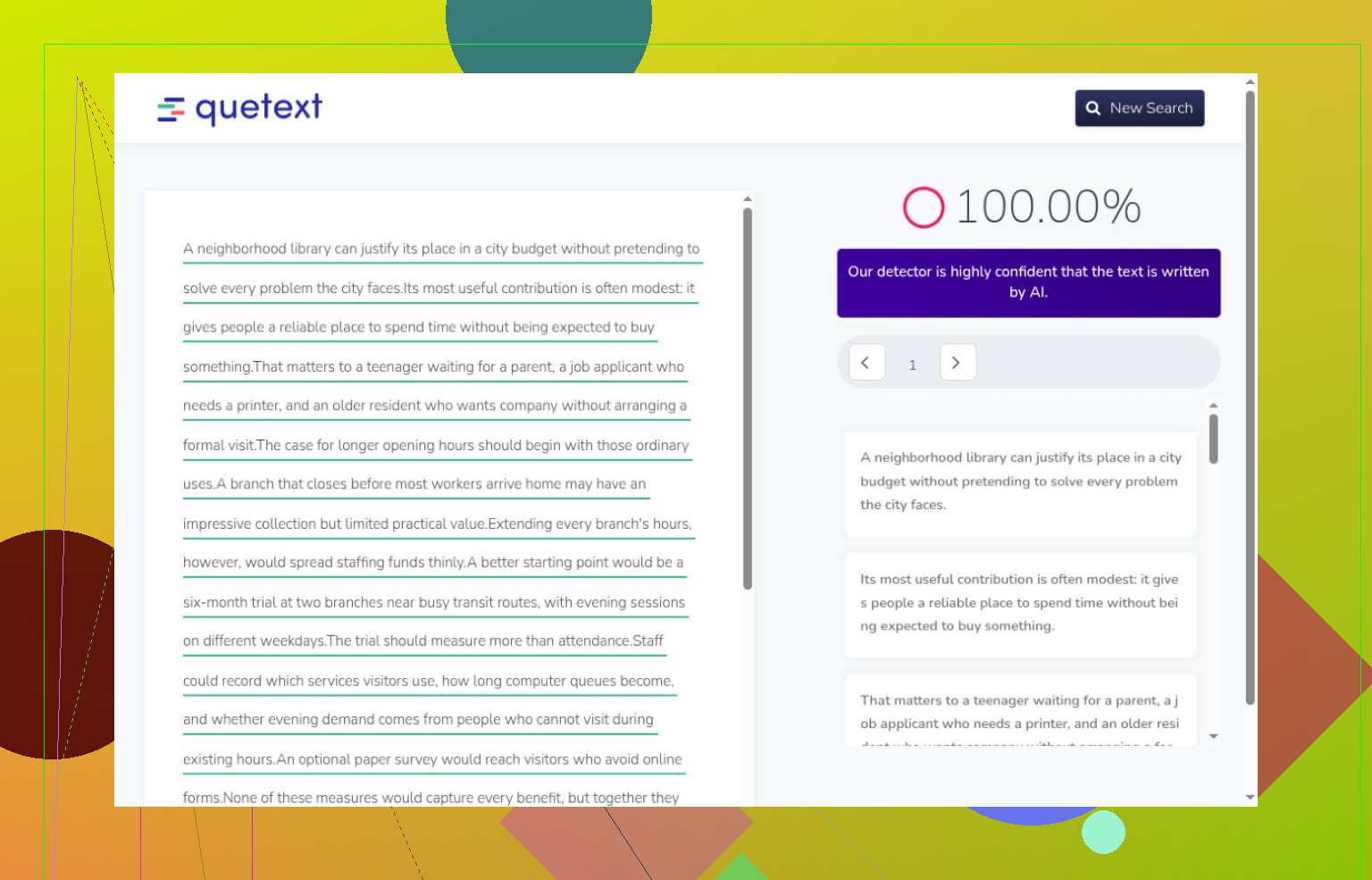
GPTZero caught three AI inputs at 100% before signup; its lingering score wasn’t another result. Grammarly’s essay scored 100%, Quetext’s 100.00%; both blocked subsequent attempts with signup. None established human false-positive performance.
Better coverage, not proof
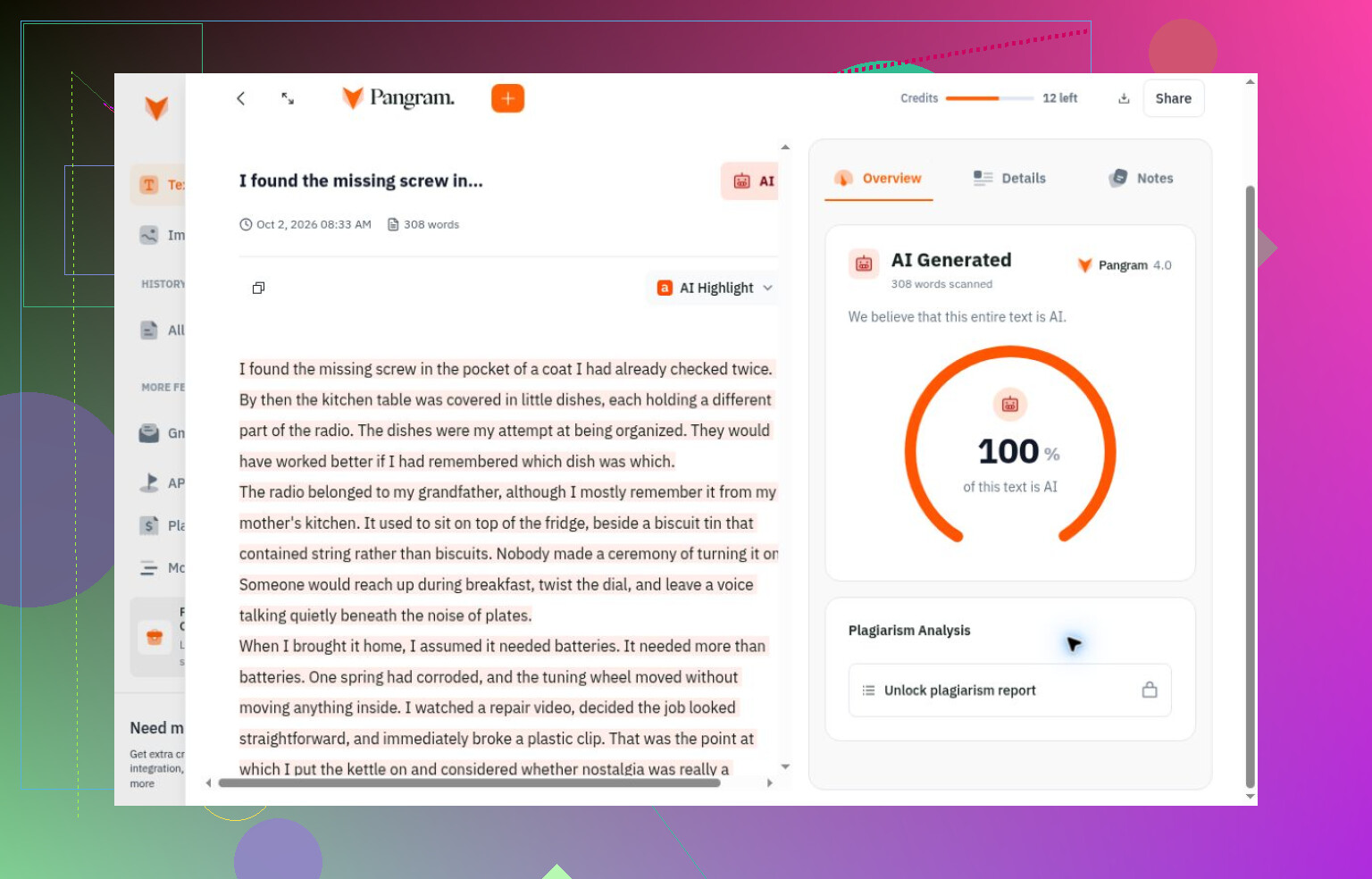
Pangram caught three AI texts and accepted Carroll, but called the edited excerpt entirely human. Its 20 length-dependent credits yielded five checks, not twenty.
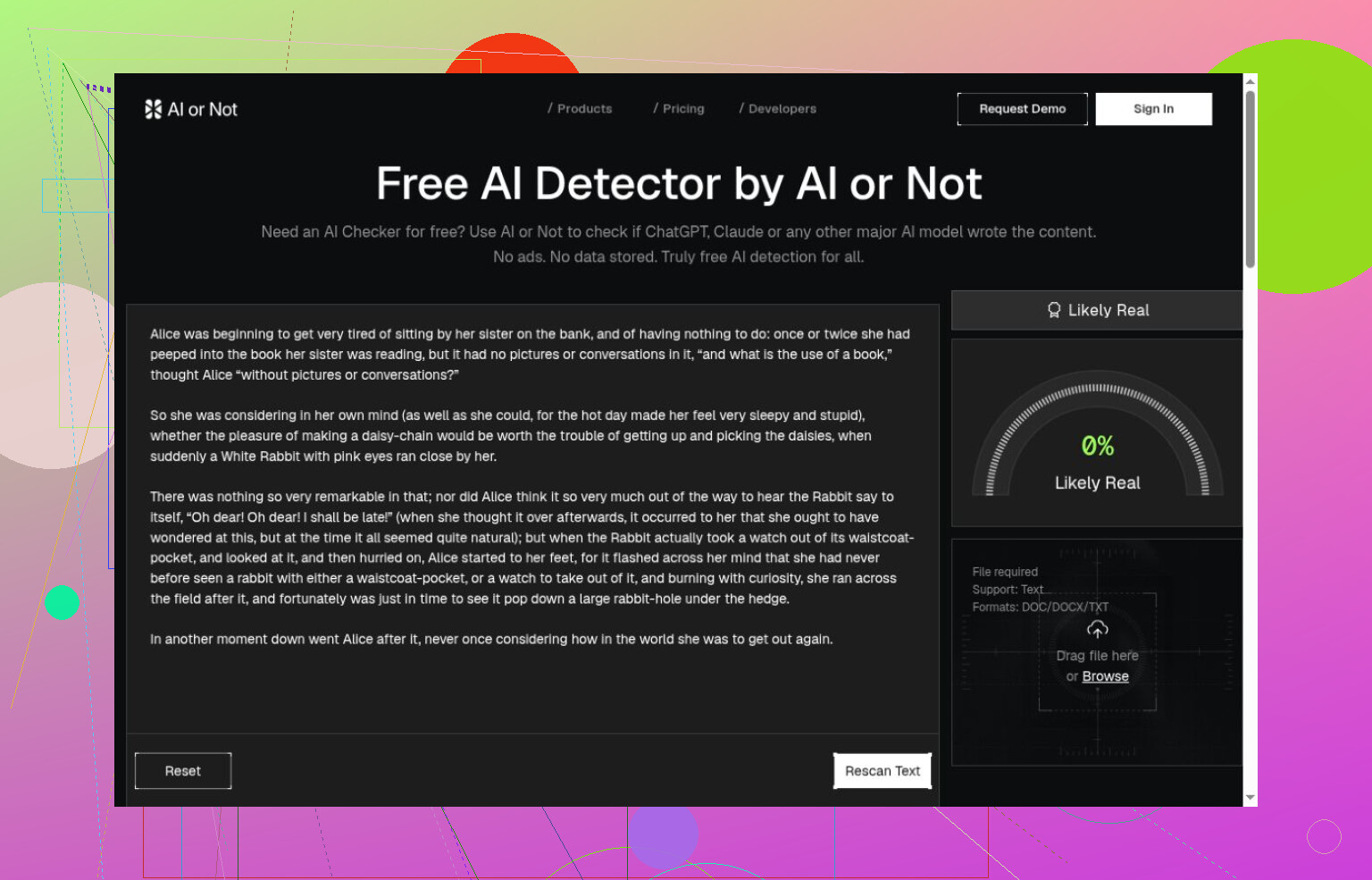
Originality.ai correctly labeled two AI texts and Carroll with 100% confidence across three guest scans. Its 15% AI Allowance was a verdict threshold, not generated-word share. AI or Not’s three guest results were 100 for both AI passages and 0 for Carroll; mixed writing and other media weren’t tested.
Six free, account-free checks yielded AI 89%, 84%, 82%, Likely AI 74%, and Human 99% for both Carroll versions. Sentence colors and explanation tags sometimes conflicted; unlimited use, scale, and maximum length weren’t verified with Clever AI Detector.
Access isn’t detection
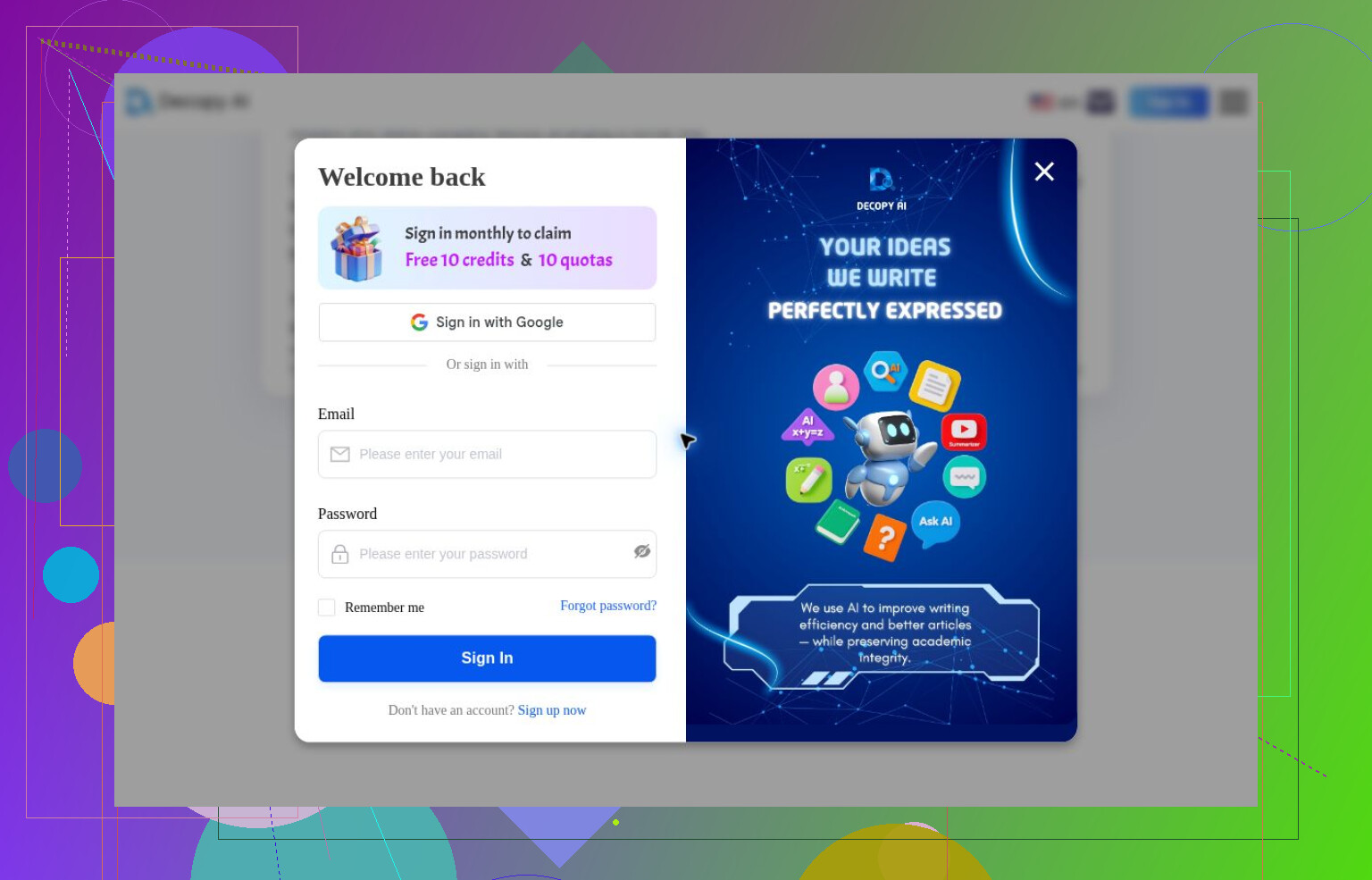
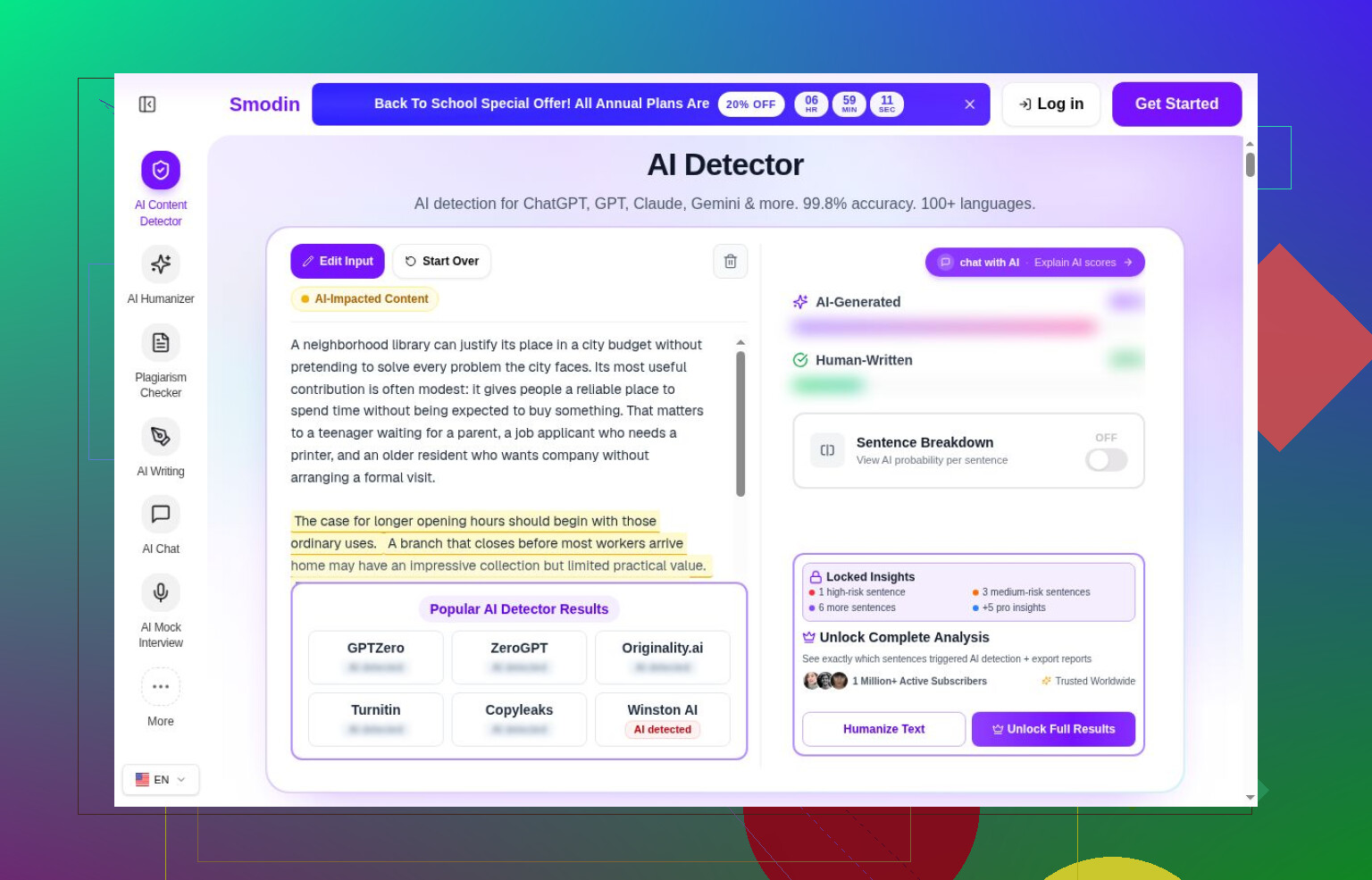
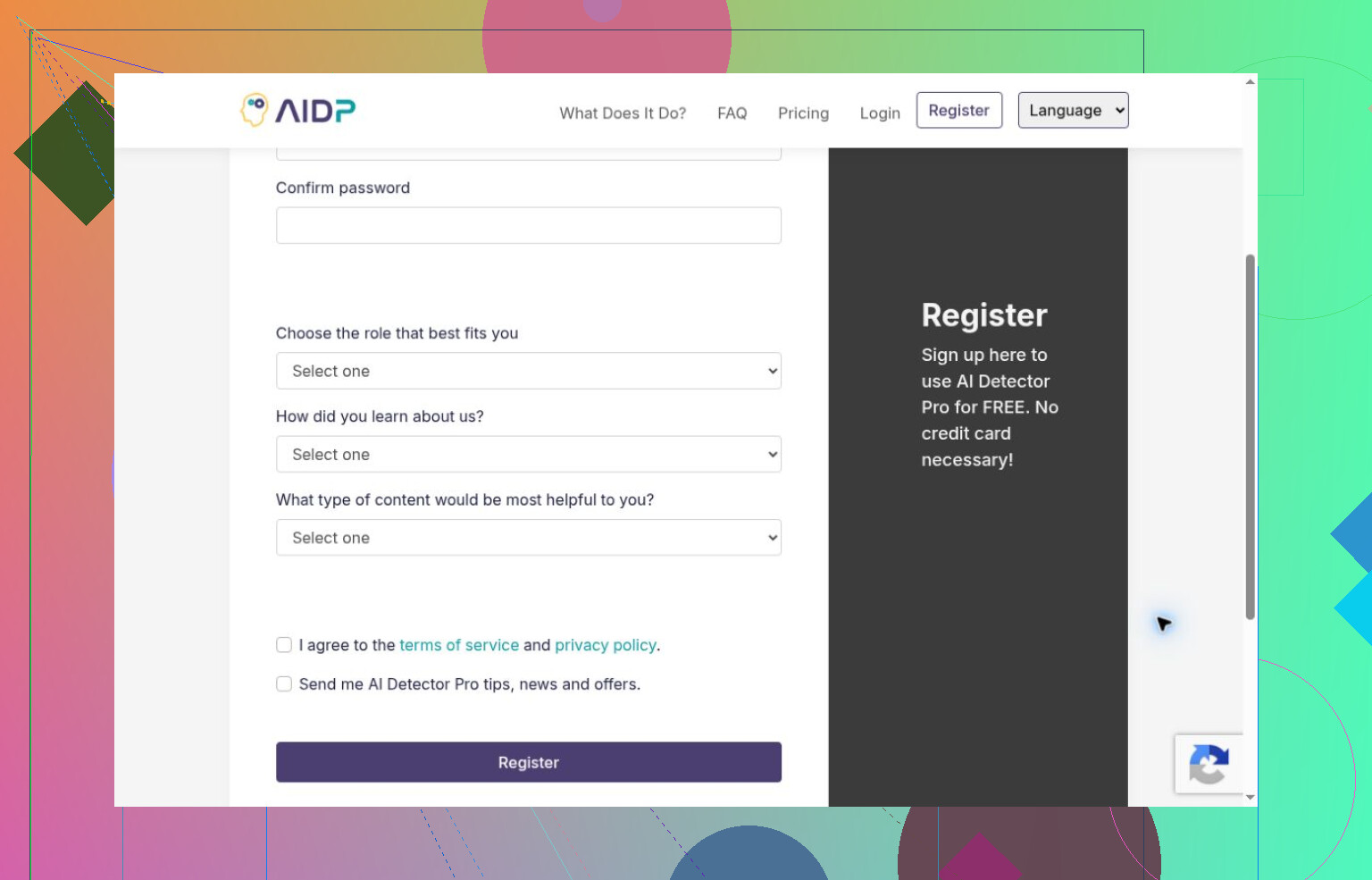
I can’t rank these untested routes: Decopy requested login despite advertising registration-free basics; Smodin hid percentages behind payment access. AI Detector Pro advertised three monthly, card-free scans after registration. Winston AI advertised 14 days and 2,000 words, also card-free, behind signup and terms.
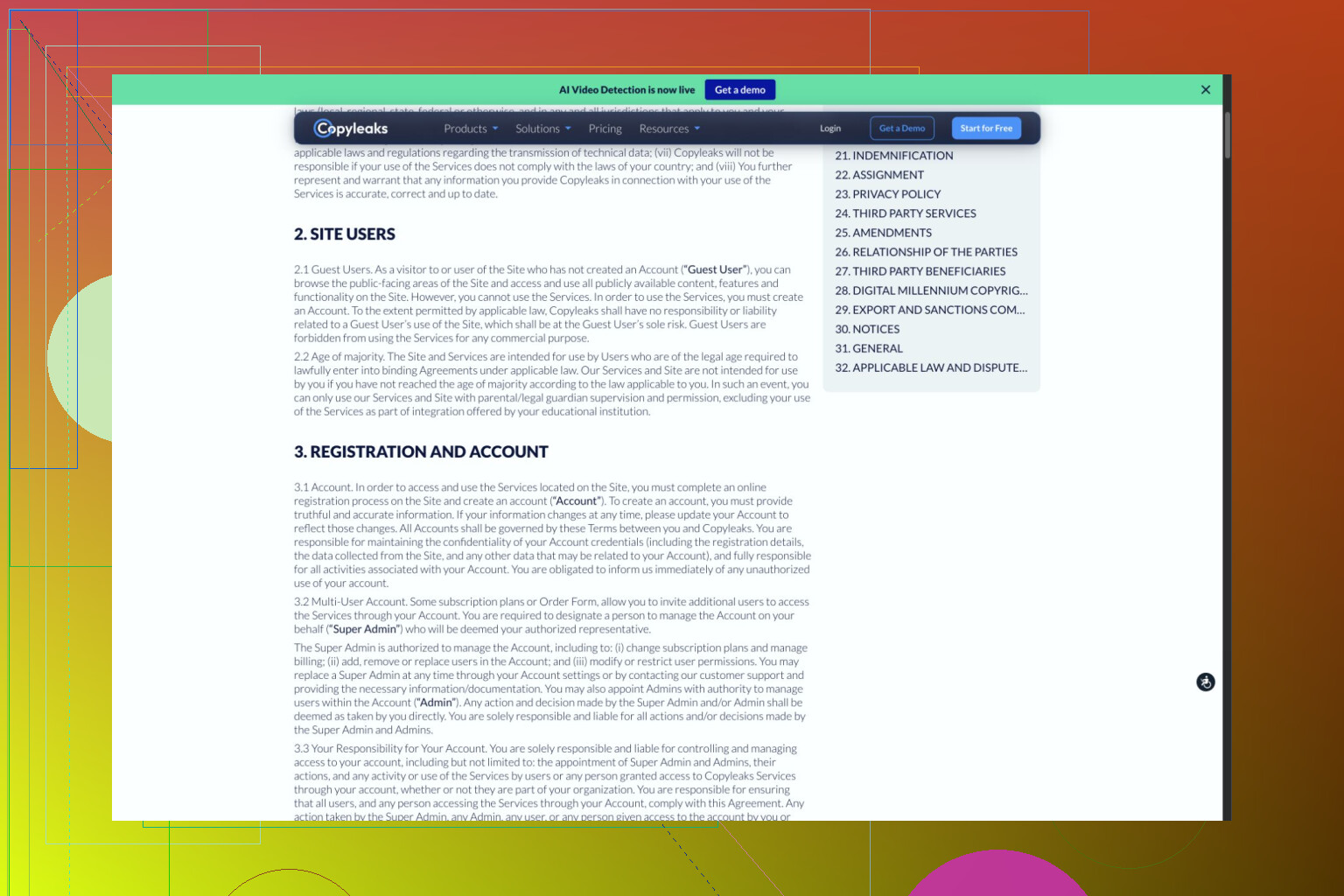
Copyleaks’ applicable-use terms stopped testing, not a failed detector. Turnitin required institutional access and an add-on. Hive’s demo accepted media; its free text extension and API weren’t configured. ContentDetector.AI redirected to a Moxby extension. Humanly’s Apple listing offered a free download with in-app purchases; neither allowance nor accuracy was verified.
What I can actually conclude
The October 2–3, 2026 checks used six unchanged English passages, 271–328 words: AI essay, memo, paraphrase, fictional personal story, Carroll, and lightly AI-edited Carroll. Unfinished attempts weren’t results. Related samples and one literary control don’t establish broad accuracy; edited Carroll isn’t purely human.
I wouldn’t equate confidence, probability, and estimated AI share, or accuse anyone from a score. Paid workflows, multilingual coverage, and varied modern human writing weren’t tested. What drafts or source evidence would you ask for before trusting a detector’s verdict?
14 Likes
If the cable-check sentence is clear enough, omit it from the rewrite and reinsert it in its original place later. Rewrite only the accompanying explanation, then check your rewritten instructions against the original. The detector discourse, including the Clever Ai Detector, is a different matter from whether your cubicle-mate is getting all the required directions.
Shortening an explanation is different from shortening a procedure: I’d make the cable check its own numbered step before editing anything. @opsux1’s workaround preserves that sentence, but I’d go further and request suggested edits rather than a replacement paragraph, then apply only the wording changes you want. For keeping detector results handy, Clever AI Detector’s saved check history is a welcome convenience with an account. (cleverhumanizer.ai) For your guide, though, make the acceptance test practical: can your coworker follow it without you supplying a missing instruction?
A cable check to be made before setup and a cable check to be made only when a connection is failed are not the same. I think that without having seen your paragraph, one would have been hesitant to make a separate numbered step, because that could have messed up the timing of when your colleague had to do it.
That’s my caveat to @kevin86’s suggestion. Giving the check its own line makes it harder to overlook, but keep any condition attached to it. For example, “If the scanner isn’t detected, check the cable connection before retrying” isn’t equivalent to “Check the cable connection.” That’s an illustrative example, not a replacement instruction for your scanner. The actual trigger and sequence should come from your original guide.
I’d check the sentence following the missing check as well. Does it say ‘then retry’, ‘once that’s confirmed’, etc.? Injecting the cable sentence isn’t going to fully repair the paragraph if the rewrite has changed what those phrases refer to. You could end up with all the actions present, but a procedure that leads the reader through them in the wrong order. That’s the less obvious problem I’d be looking out for here.
For one more try, ask the editor to do a narrowly scoped edit rather than asking it to generally clean things up: ‘Edit for grammar and readability only. Preserve every action, condition, warning and the order of operations. Do not combine repeated instructions. Leave any sentence as is if simplifying it would change any of those details.’ If the interface doesn’t let you provide instructions, I wouldn’t be feeding the paragraph through and through again and hoping the next version remembers the check.
Then ask yourself whether what resulted preserves what to check, when to check it and what to do next. Smooth wording won’t make up for any of those being lost. Based on the repeated omissions you’re describing, I’d consider Walter Writes AI unfit for rewriting this procedure wholesale. It may still be able to produce wording you’d want to borrow, but that’s a much smaller task than asking it to take responsibility for the finished instructions.
If the scanner has separate power and data cables, restoring “check the cable” could still leave your coworker guessing. I’d check whether the rewrite preserved the original component names, too. A sentence can survive an edit while losing the detail that makes it usable, such as which cable to inspect or which end of the connection matters.
@silentcraft7782’s point about timing applies to terminology as well. “Connection,” “cable,” and “power” shouldn’t become interchangeable just because the paragraph reads more smoothly. Neither should an exact button label become a friendlier phrase that your coworker won’t see on screen. For this guide, I’d treat hardware names, interface labels, and any connection endpoints specified in the original as fixed text. Edit the wording around them. If the original itself is vague, that needs clarification from whoever knows the setup, not a more confident rewrite.
That gives you a narrower way to judge Walter Writes AI here: compare what the coworker can identify in each version, rather than just whether every sentence has an equivalent. The missing cable check is an obvious failure. An instruction that remains present but no longer points to a specific component is easier to miss during review.
The reason the cable check keeps vanishing is that a language model reads a short verification step as filler. It looks redundant next to the main action, so a general ‘clean this up’ instruction trims it. You can fight that with careful prompts all day and it will still happen on the next paragraph, because you are handing a prose smoother a procedure it does not recognize as a procedure.
So I’d stop rewriting procedures as paragraphs at all. Pull the real steps out of the original and keep them as a plain numbered list that no tool ever touches. Let the editor polish the intro, the awkward warnings, whatever actually reads badly, but not the sequence. @silentcraft7782 is right that pasting the missing sentence back can leave the ordering broken, and the simplest way around that is to never let the rewrite own the ordering in the first place.
Quick check before you hand it over: strip both versions down to just the verbs. Original says plug in, check cable, power on, retry. If the rewrite’s verb list does not match line for line, you have your answer without reading a single polished sentence. That catches the dropped check and the quiet terminology swap @0xdragon9 flagged, where a word survives but no longer points at anything.
The detector angle, Clever AI detector and whatever else, is irrelevant to whether it’s a friend that can follow the guide, so I wouldn’t do that to pollute the call. Judge by yourself by one thing that someone who has never touched the scanner can get through every step without calling you. If Walter keeps eating the cable check, it’s already failed there, so rerunning it only makes it different which detail will be missing next time.