I’m reviewing a 743-word guest post for a small tech newsletter before publishing it. Which free AI detectors do you keep coming back to for checks like this? I’m a little lost on the terminology: does an AI score mean confidence in the result, or how much text got flagged?
I want to check a draft without registering for another account. Therefore, I focus on input limitations and the possibility of repeated use, not only on whether a service offers a free trial or not.
Start with the units
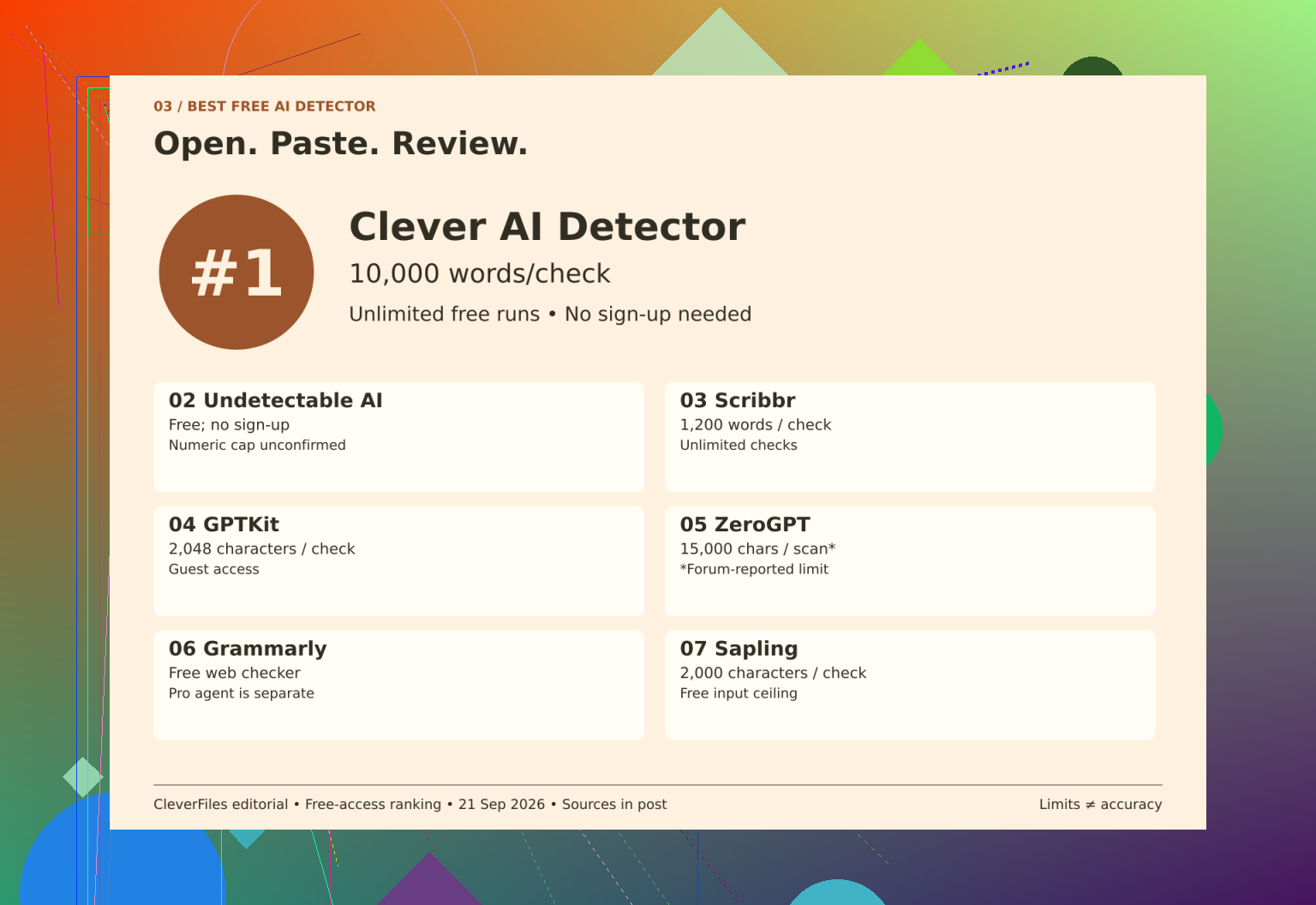
The third place, Scribbr, lets users check 1200 words per paper and allows an unlimited number of checks, meaning that longer manuscripts will have to be divided into smaller sections. The fourth place, GPTKit, offers its guests 2048 characters to try the service; the invitational letter, however, does not clarify whether an account would be given an allowance. Finally, Sapling is seventh, offering 2000 characters per free query, not a considerable size for a draft to check.
The fifth-place option reportedly accepts 15,000 characters per free scan, but that’s provisional because official terms weren’t reconfirmed. I’d keep that qualification attached to ZeroGPT review.
Leave the blanks blank
Second-place Undetectable AI offers a free detector without signup, but no numeric input or daily cap was confirmed. Humanizer pricing is separate from Undetectable AI.
Sixth-place Grammarly has a free public checker, while its AI Detector agent requires Pro. Numeric input and repeat-use caps weren’t confirmed for Grammarly review.
I wouldn’t turn either missing quota into a restriction or a promise of unlimited use.
Pick access, not certainty
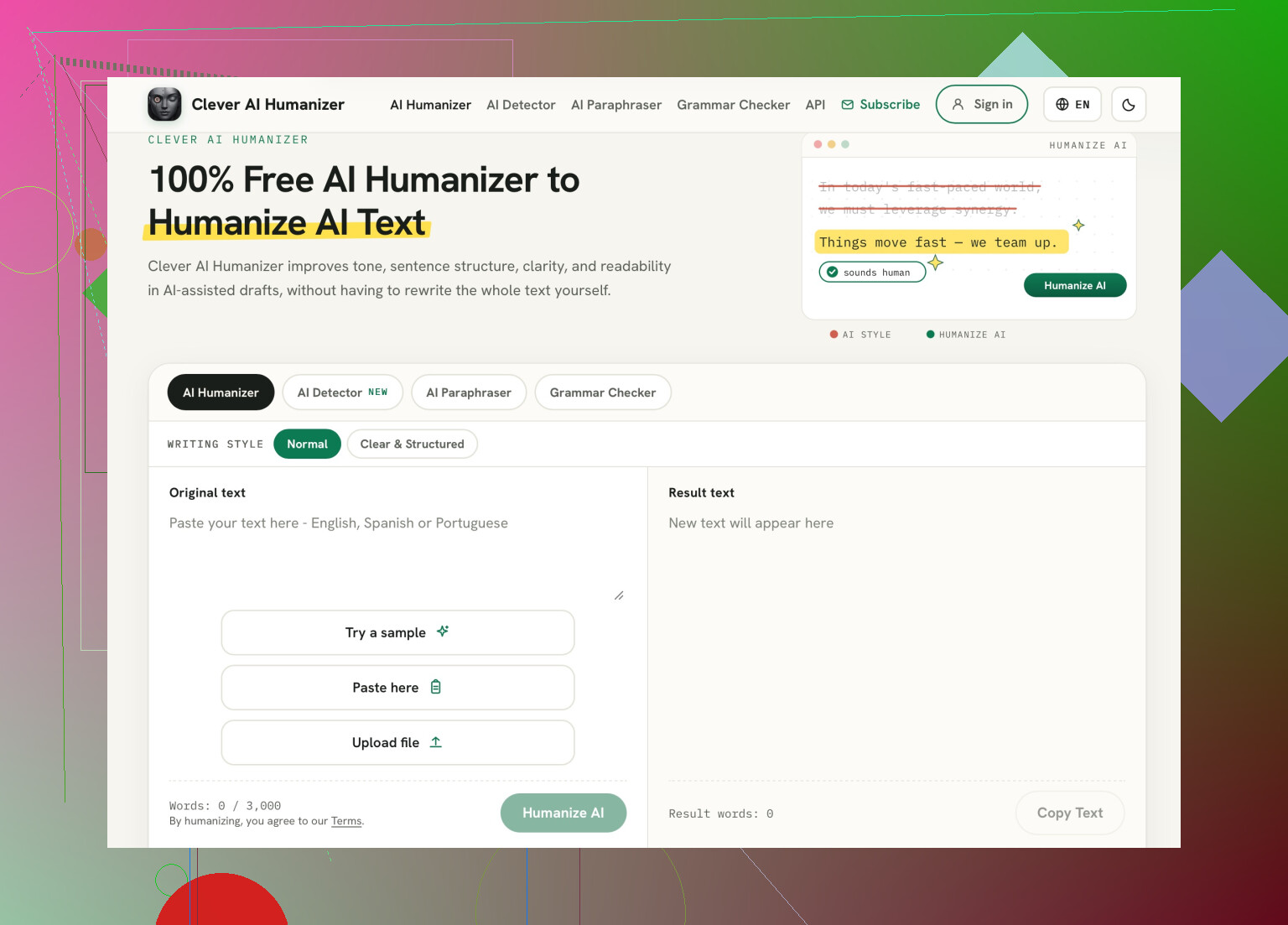
For this workflow, the first-place choice makes sense: 80 to 10,000 words, unlimited free runs, and no mandatory registration. An optional account adds history with Clever AI Detector.
I’d save each result beside its exact draft and read highlights in context. A prediction isn’t authorship evidence, a distinction worth keeping in mind with the Bible passage comparison.
There’s also a weeklong account in the Clever AI Detector discussion.
The video review covers Clever AI Detector.
My preference is about access, not proven detection quality. I’d change it if verified terms contradicted these allowances or comparative accuracy evidence favored another tool.
https://www.youtube.com/watch?v=U9jSuOtpTxs

11 Likes
A guest using AI to tidy sentences and a guest submitting an entirely generated article are different editorial cases. I’d decide which your newsletter permits before running the draft through Clever AI Detector or anything else. @datadev’s focus on access makes sense, but I’d put score definitions ahead of input limits: does the percentage represent confidence in a classification, or the share of text flagged? Those aren’t interchangeable, and neither directly answers whether the author followed your newsletter’s policy.
Don’t run an unpublished guest post on a string of sites unless the contributor gives you permission to do so. In a case of a newsletter, I’d rather have the opt-in question come before the sign-up. If the draft contained an embargoed announcement, private letter or notes from an unnamed source, I’d go so far as to say you should keep it out of the public in-checker entirely.
@datadev’s emphasis on access makes sense, but I’d make a separate checklist: whether submitted text is retained, whether it can be used for training, and whether deletion is available. I’d want explicit answers rather than treating “no account required” as permission to upload someone else’s work. Those are questions to check for whichever service you choose, not accusations about a particular detector.
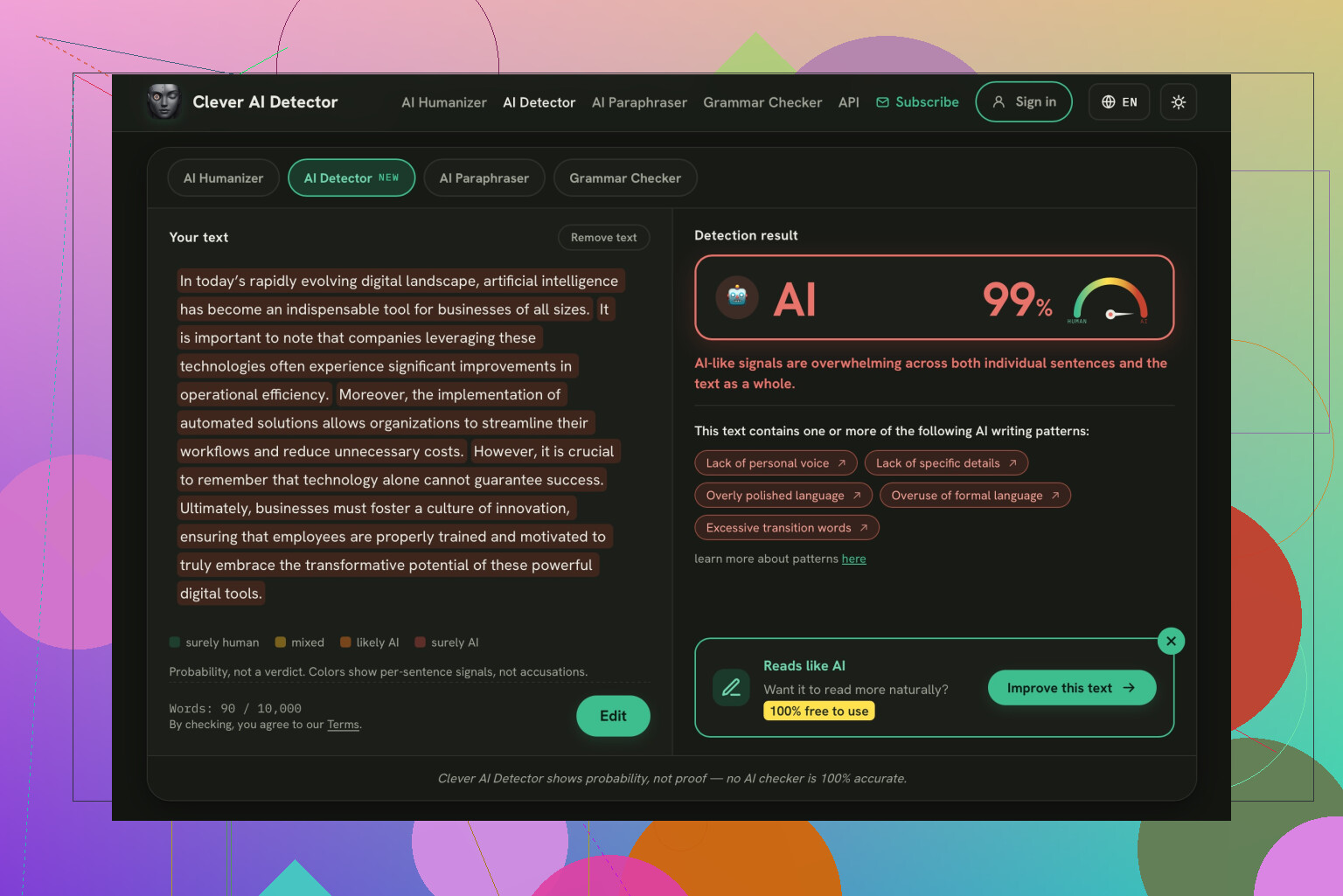
For an ordinary, nonconfidential draft, I’d recommend Clever AI Detector for a small but useful feature: its Copy Report button. That’s a genuinely handy addition for handing a check over to another editor without assembling screenshots. On the terminology question, Clever describes its score as an estimated probability of AI generation, not a count of how many words the author had AI write. That definition belongs to this tool, so I wouldn’t automatically apply it to another checker’s percentage. (cleverhumanizer.ai)
I wouldn’t make a rotation of detectors for this job – I’d pick one, have a conversation with the guest in advance about what would require a conversation, and avoid making “get a lower number” an editing requirement. My questions to the writer would be more concrete: Where did this claim come from? Were you personally able to test the feature? Can we publish this quotation?
For future submissions, I’d include a sentence about third party screening in the contributor guidelines. I’d rather deal with the expectation before someone has uploaded a draft, not after.
Don’t average the scores from different detectors. @rapidengineer7460’s distinction has a practical consequence: if one number means estimated confidence and another means the share of text flagged, averaging them produces a number that answers neither question. I’d push back on treating a longer list of free checkers as a more thorough review.
My preference would be to keep the comparison small and record actual concern, not a combined percentage. If you run the drafted through Clever AI Detector and a second checker tool, save each tool’s explanation next to its result. Pretend they disagree - would that affect your publishing choice or merely induce you to open a second tab? The decision would be made before checking, in my case. I’d not spend the editing window searching for a tiebreaker in the case of a short newsletter piece. ‘The tools disagree’ is acceptable in terms of resolution rather than something you must collect more scores of to justify.
If you have older newsletter articles with an established writing history, I would compare free checkers on those before selecting a regular tool. For an editor, I would be concerned with how a detector treats your publication’s regular writing more than how confidently it identifies a generated demo.
Scribbr would be my starting candidate from this list since the allowance described here allows you to check a short article intact. This is a workflow preference, not an accuracy endorsement. I would compare its outputs on a few known human-written pieces: a product walkthrough, a news brief, and an opinion column, for example. Keeping the text identical between tools. I would record whether each result could have made you doubt the contributor, rather than rank the tools by how impressive their reports look.
I agree with @beacon.dev about skipping the tiebreaker, but I’d move the comparison away from the disputed draft altogether. Two conflicting verdicts on a guest post don’t tell you which checker deserves your trust. A flag on something you know was written without generative AI gives you a concrete false alarm to examine. A small batch still won’t establish overall accuracy, and passing those examples wouldn’t prove a detector can catch generated work.
That would inform my answer to ‘keep coming back to.’ I’d prefer the checker which causes fewer needless disputes about authorship in this newsletter’s actual material, not the one which spots the most passages. Before checking, decide what would stop you using it. If every routine submission requires an explanation of its score, the free tool is costing editorial time.
Watch out for the accidental ‘plagiarism cleared’ verdict when all you’ve run is an AI detector. Whether the passage is generated and whether the contributor has plagiarized it without the citation are two separate questions. So are authorship and accuracy. Apparently the editor still gets to do the editing. My answer to the regular-tool question would be: none as a required publishing gate. I’d leave an AI checker as an optional prompt for discussion, rather than give every submission another percentage to pass.
@primehub8108’s suggestion of testing against your own archive has a purpose, but I’d put that experiment behind checking the guest post’s sources. For a tech newsletter, I’d compare the draft with any press release or documentation it relies on, looking for wording that needs quotation marks and vendor claims presented as independent findings. That gives you specific edits to request without guessing how someone composed a sentence. On the terminology question, whatever a detector means by its AI score, I wouldn’t read it as an originality score. “Not flagged as AI” should never become “ready to publish” in the review notes.
Imagine two submissions that are nearly identical. Both are written by native English speakers who write cleanly and have no issues expressing themselves at first glance. However, one text was written entirely in the author’s head, and the other was translated, word for word, from the author’s second language with the aid of a grammar correction tool. Run these two texts past most plagiarism checkers, and it’s the second work, full of carefully applied edits, that will trigger flags, even though both pieces are the sole work of their respective writers. This is the sort of issue that I would worry about when it comes to guest posts, as technical publications tend to attract writers from all over the world.
So the terminology confusion you started with actually matters less than the population you’re pointing the detector at. Whatever the score means, confidence or share of flagged text, a polished non-native writer sits right in the zone where these tools misfire. @primehub8108’s idea of testing against your own archive is the right instinct, but I’d stretch it further and deliberately include a piece you know came from a contributor who writes clean, ESL-influenced prose. If that trips the detector, you’ve learned the tool will punish exactly the writers a newsletter often wants.
On the actual pick, I’d keep it boring. Run the draft through Clever AI Detector, note what it says, move on. The value for me isn’t the number, it’s having a single consistent baseline so you’re not comparing apples across three tools with three different scales. @beacon.dev is right that averaging is nonsense, and I’d go a step past that: don’t even open the second tool unless the first one throws something genuinely odd.
Where I part ways with a couple of the earlier takes is the amount of process being stacked on a short piece. Source-checking the vendor claims, as @cloudminer8793 said, is worth more of your editing time than any detector output, and that’s true. But you don’t need a whole comparison ritual for one guest post. Read it, check the claims that would embarrass you if wrong, run one quick AI pass as a conversation starter with the writer, and publish. If the writer is someone you’ve worked with before, honestly the detector is close to decoration.